Capital for the businesses where the chair is the asset.
Hair salons, nail salons, day spas, med spas, barbershops — a category lenders sometimes lump together and sometimes carefully separate. We work with both kinds. The right structure depends on whether you operate full-service, booth-rental, or chair-rental, and on whether your revenue is service-only or includes high-margin retail.
How does a salon owner pay for a build-out or a second location?
Almost always a term loan, sized to the contractor’s bid plus a cushion. The reason is simple: a build-out has a start and an end, so a loan with a fixed payment and a fixed end date matches it. Lenders will fund a salon that has been open a year or more with steady card deposits. Your operating model changes what they will approve. A full-service salon shows all the service revenue in its own account. A booth-rental shop only shows the rent, which looks like a much smaller business, so it borrows less on the same square footage.
What we see funded
- Build-out and renovation. New location, refresh, conversion of one operating model to another (e.g. moving from booth rental to full-service).
- Equipment. Stations, chairs, basins, dryers, wax warmers, lasers (for med spas), pedicure stations.
- Inventory and product lines. Bringing on a new haircare or skincare brand often requires a meaningful upfront commitment to stock minimums.
- Working capital for ramp-up. A new stylist takes 6–12 months to build a clientele; payroll runs ahead of revenue during that period.
- Med-spa-specific equipment. Lasers, body-contouring devices, IPL machines — high-ticket items that generate identifiable per-treatment revenue.
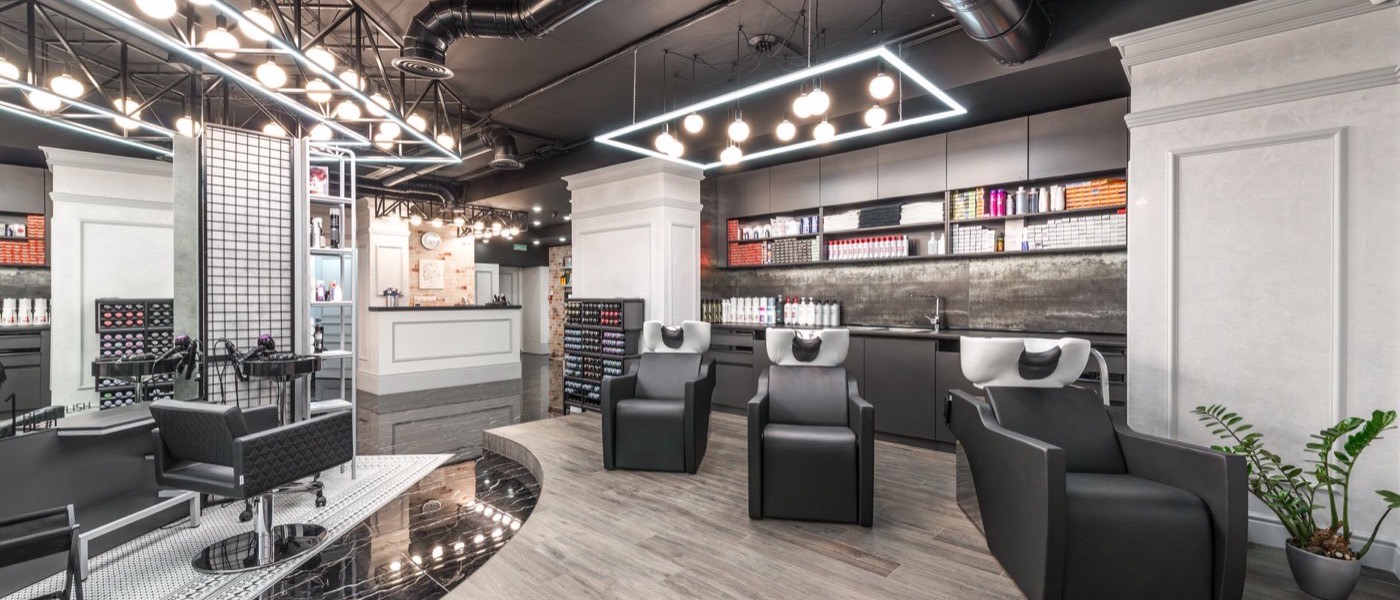
What a salon or spa deal usually looks like
A six-chair full-service salon collects about $520K a year. The owner takes the suite next door to add three chairs and a color bar. The build is $95K. We place a $110K term loan over 48 months. The payment is roughly $2,600 a month, and three chairs at normal utilization bill several times that. Approval takes a day or two once we have 12 months of statements.
Med spas run bigger. A body-contouring device at $120K goes 60 months through a medical-aesthetic lender, and those lenders will often structure the first few payments low while the treatment gets marketed. On the small end, bringing on a new professional haircare line usually means a $15K to $30K opening order, which is line-of-credit work, not a loan.
What lenders look at
Four things, and they are not the ones most owners expect.
Chair count. The simplest measure of capacity. It caps how much the business can bill in a week.
Booth-rent consistency. If you rent chairs, the lender wants to see the same rent arriving every month. Chairs that sit empty half the year make the income look unreliable.
Retail versus service. Product sales carry a much higher margin than service hours. A salon selling real retail is more profitable at the same revenue, and lenders notice.
Average ticket. A color-and-extensions salon at $220 a visit is a different business from a barbershop at $35, even if both do $500K a year.
Med spas get routed separately. The equipment costs more, the license requirements are clinical, and the lenders who understand lasers are not the ones who understand blow-dry bars. Some of those same lenders fund medical and dental practices.
What we recommend
Building or renovating? Term loan. Buying a laser or a contouring device? Specialty equipment financing through a medical-aesthetic lender. Stocking product or carrying a new stylist through ramp-up? Line of credit. RBF when the window is short — an equipment deal that expires, a landlord offering a discount for a fast signature.