Capital for the shops that keep cars on the road.
Auto repair is consistent, recession-resistant, and surprisingly fundable when the file is presented well. Lenders like the cash-business component, the recurring-revenue nature of fleet accounts, and the fact that demand doesn’t go away.
How does an auto repair shop finance a new lift or bay?
Equipment financing is the standard route, and it is usually cheaper than a general business loan for the same dollars. The machine secures the loan, so the lender takes less risk and charges less. A lift, an alignment rack, or a tire changer typically goes 36 to 72 months. Many shops find the monthly payment lands close to what the added bay bills in a single week. If the project is bigger than one machine — pouring a slab, running new air lines, adding a door — a term loan covering the whole job is the better fit.
What we see funded
- Lifts and equipment. Two-post lifts, alignment racks, A/C machines, scan tools, tire changers, balancers. Specialty equipment financing typically gets better terms than generalist financing for the same gear.
- Diagnostic and software. Modern shops have real software costs — OEM scan tools, scheduling software, parts catalogs. Term-loan or equipment-financed.
- Building improvements. Bay additions, paint booth, alignment pit, signage, lighting upgrades.
- Working capital. Parts inventory, payroll, slow weeks, insurance carrier delays for collision shops.
- Acquisition. Buying an existing shop, either competitor or a retiring owner’s business.
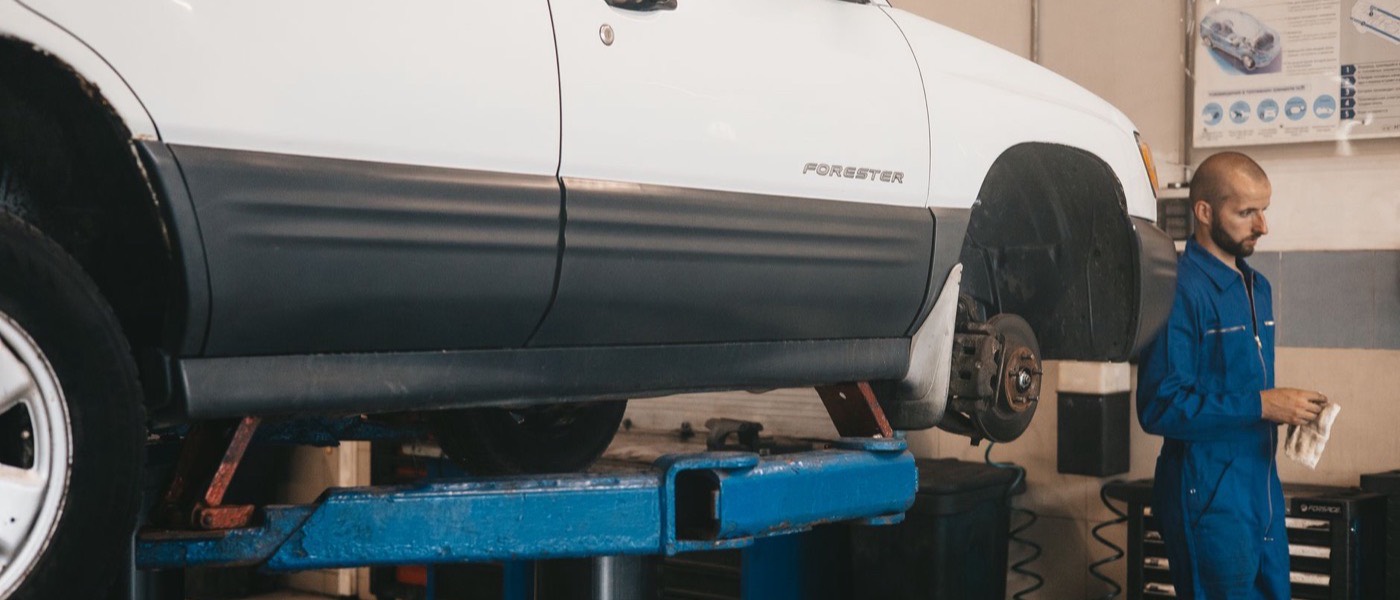
What a shop deal usually looks like
A four-bay general repair shop bills about $840K a year and wants a fifth bay. The build is $70K: slab work, a two-post lift, air lines, and a door. We place an $85K term loan over 60 months. The extra covers the tool package the owner did not budget for. Decision comes back in two business days, funding about five days after that.
Single machines are simpler. A $22K alignment rack goes 48 months on equipment financing, often approved the same day with an invoice from the distributor. Parts inventory and payroll during a slow February are different again — usually a $50K line of credit that gets drawn and repaid a few times a year.
What lenders look at
Four things carry the file.
Bay count. It tells the lender your ceiling. A shop cannot bill much more than its bays and its hours allow, so bay count sets the top end of what they will lend.
Technician retention. Techs are the business. High turnover reads as unstable revenue, because a shop that loses two techs loses real capacity for months.
Who pays the bill. Customer-pay work settles at the counter. Warranty and insurance work settles in 30 to 60 days. Lenders want to know the split, because it tells them how fast your money actually arrives.
Average ticket. A shop averaging $600 a repair order and one averaging $180 are different businesses, even at the same revenue.
Collision shops get a closer read because insurance carriers pay slowly. General repair, tire, and lube shops are viewed well — the work is steady and it does not disappear in a downturn.
What we recommend
Buying a machine? Equipment financing through a specialty lender. Expanding the building? Term loan. Covering parts and payroll? Line of credit. Waiting on insurance carriers? Factoring or an AR-backed line. RBF only when the need is short and the use clearly earns back the cost.